Fixing the cancellation dark pattern
An independent redesign of Noom’s real cancellation flow — grounded in its 2022 $56M dark-pattern settlement.
- Project
- Subscription cancellation flow
- Role
- UI/UX design (concept)
- Reference
- Noom — public critique, unaffiliated
CH 01About Noom
About Noom
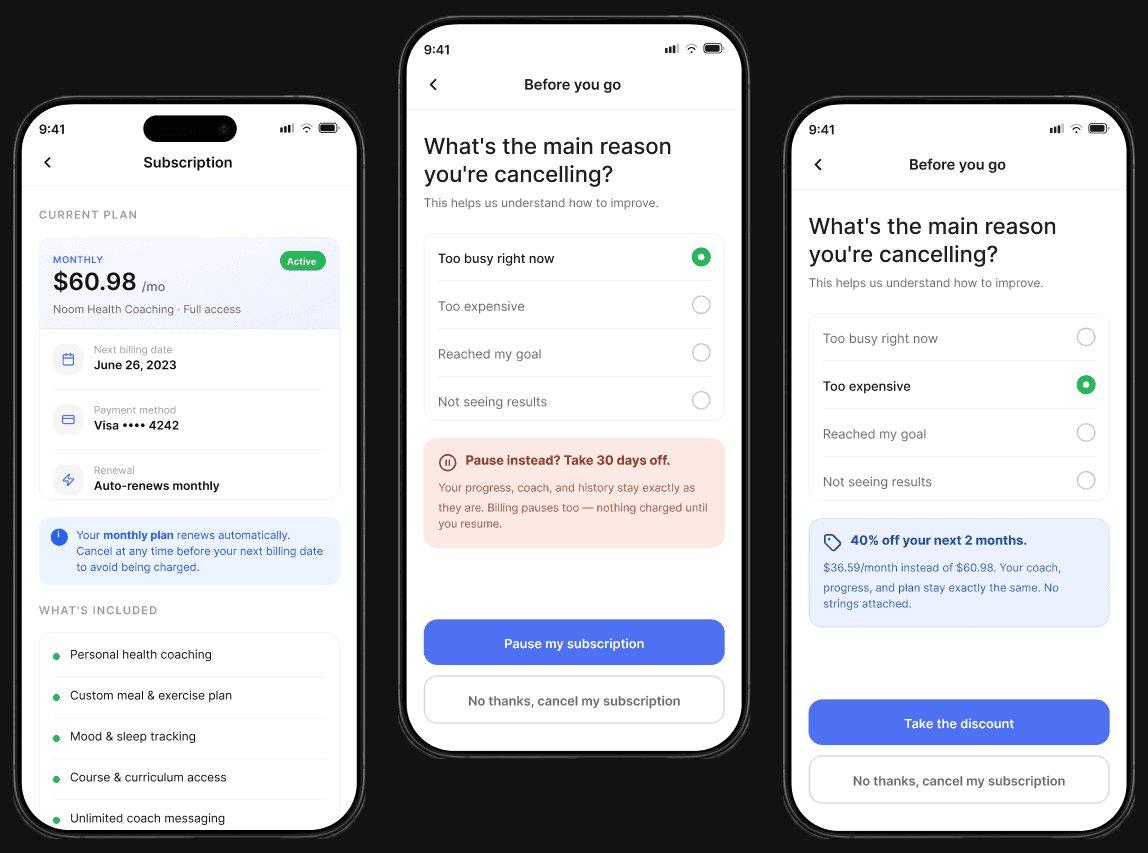
Noom pairs users with human coaches for weight loss. It's subscription-based — so the cancellation flow is high stakes. In 2022, Noom paid $56M to settle a lawsuit over cancellation dark patterns: forced account deletion, unclear renewal terms, complaints from users persisting for years after.
CH 02Why fix it
Why fix the cancellation flow?
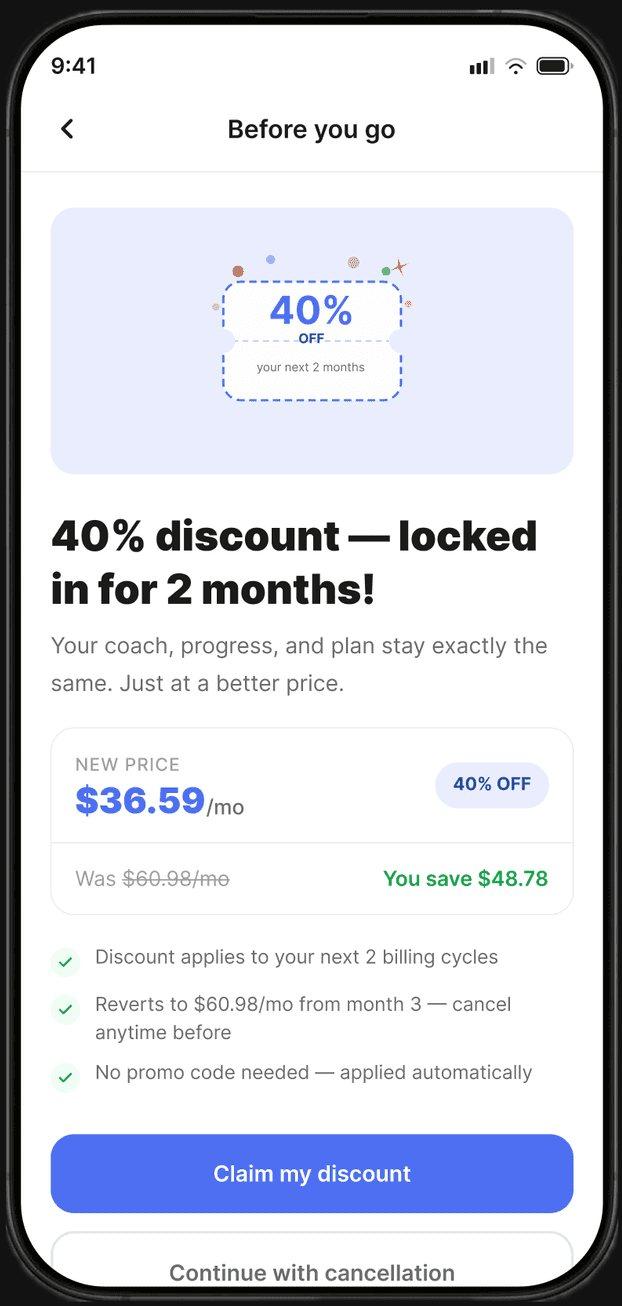
Friction-based retention already failed here — it cost $56M and years of complaints, not retained revenue. Pause recovers users without a permanent discount — it has a natural end date and reverts to full price automatically.
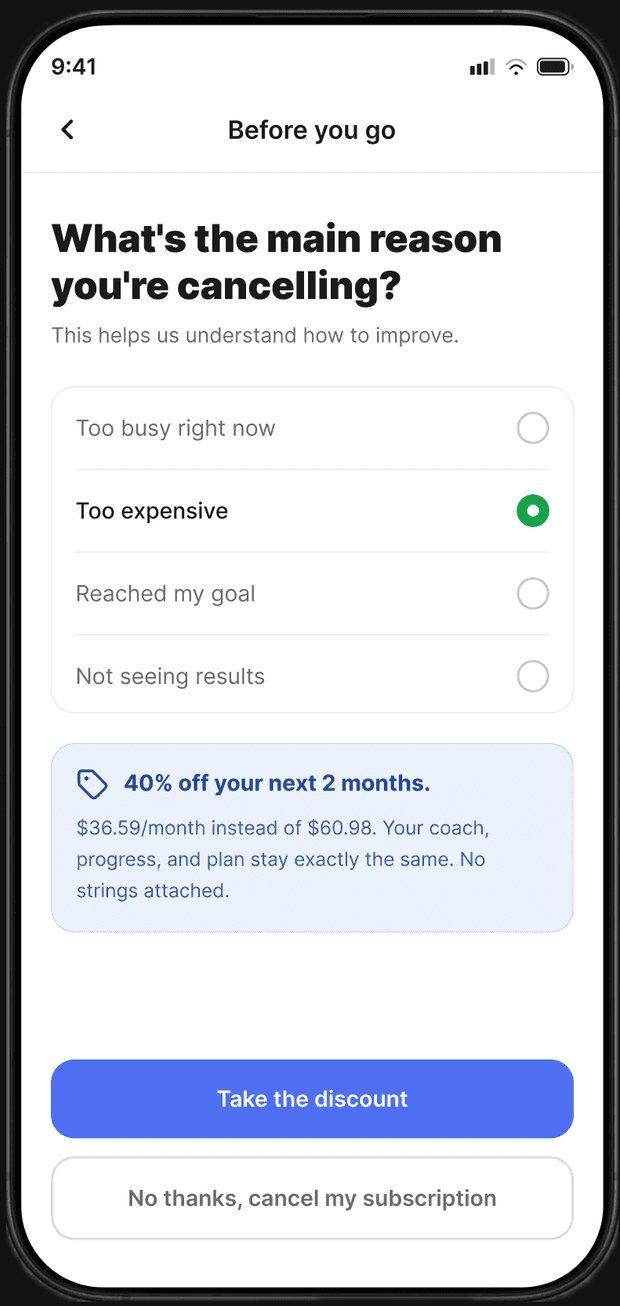
Matching the offer to the real reason makes it credible rather than generic. A fast, visible decline path keeps this compliant with FTC click-to-cancel rules — the exact thing forced friction wasn't. Illustrative, not measured: ~35% cite “too busy,” ~20% assumed pause-acceptance rate → ~70 subscription-months recovered per 1,000 cancellations.
CH 03The core problem
No way to just cancel
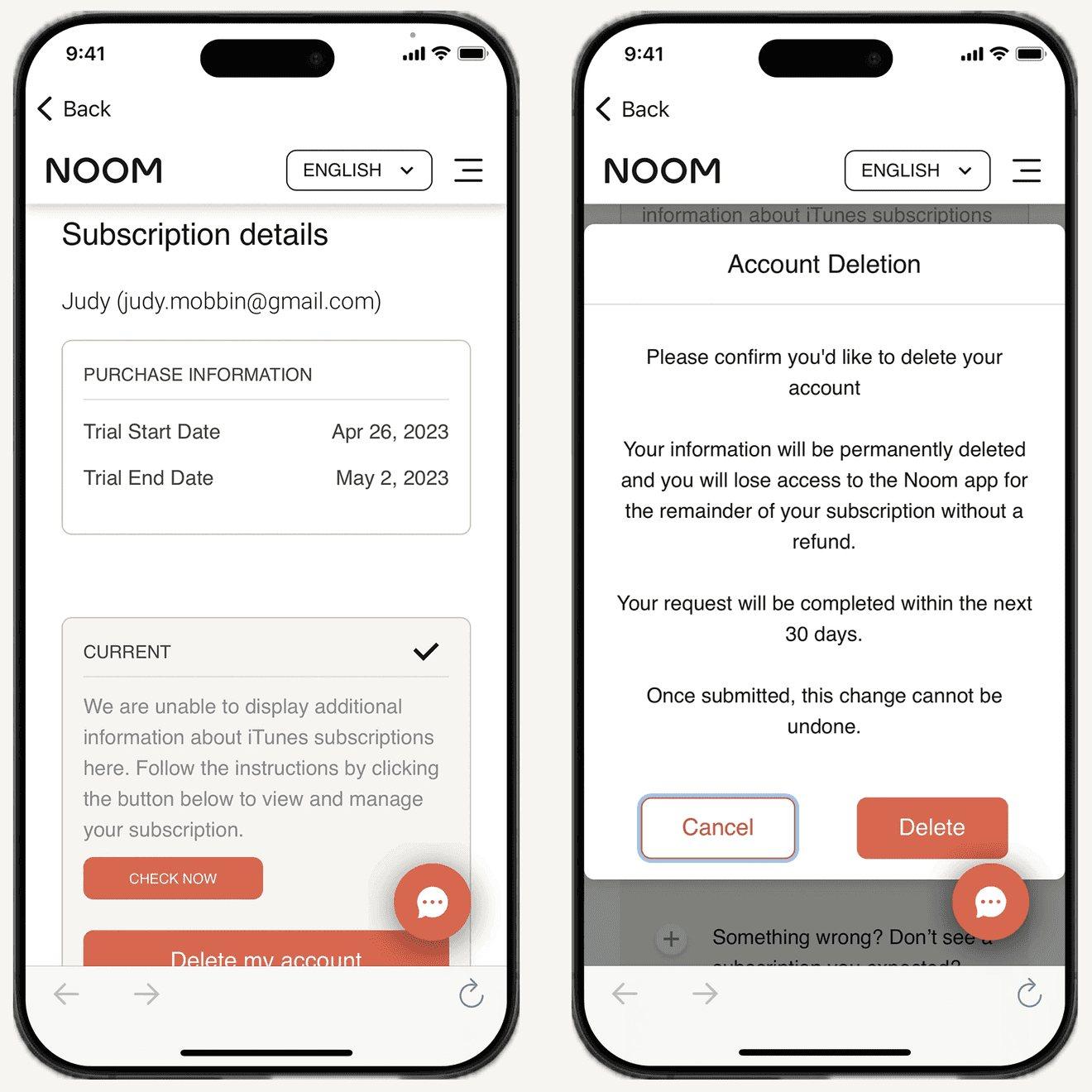
The only exit is full account deletion — bundling “stop billing” with “erase everything.” No retention offer exists until that final, worst-possible moment.
CH 04The fix
The solution
Fix 01
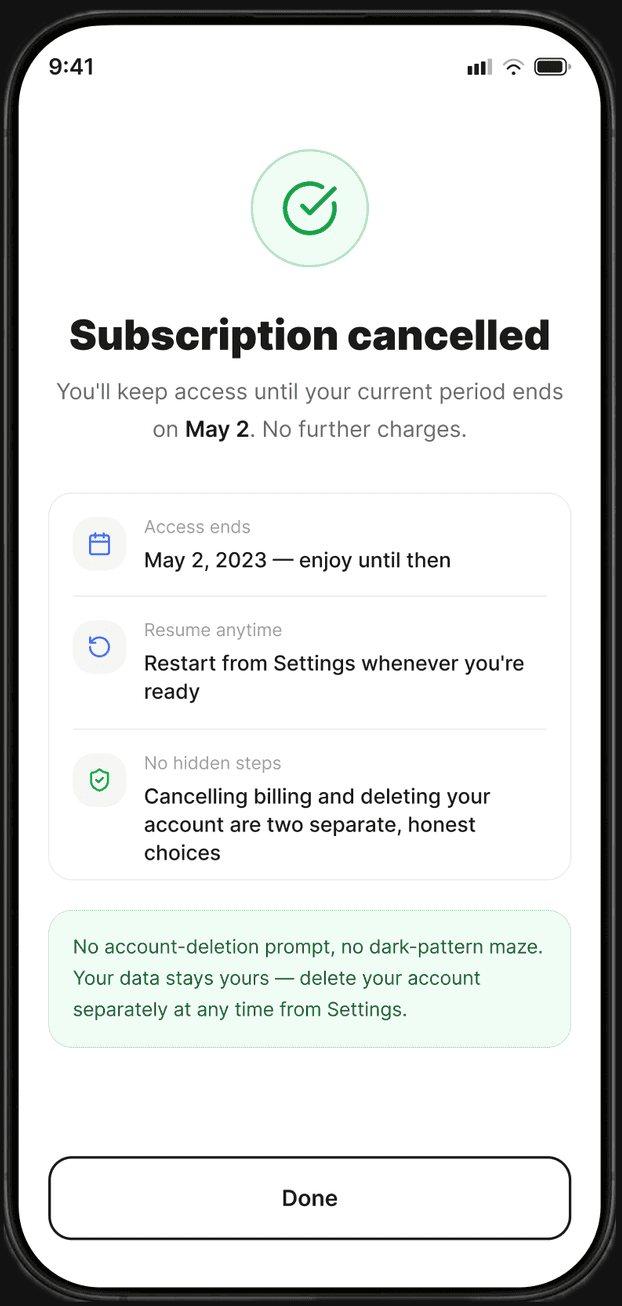
Direct cancel entry — no detour through account deletion
Fix 02
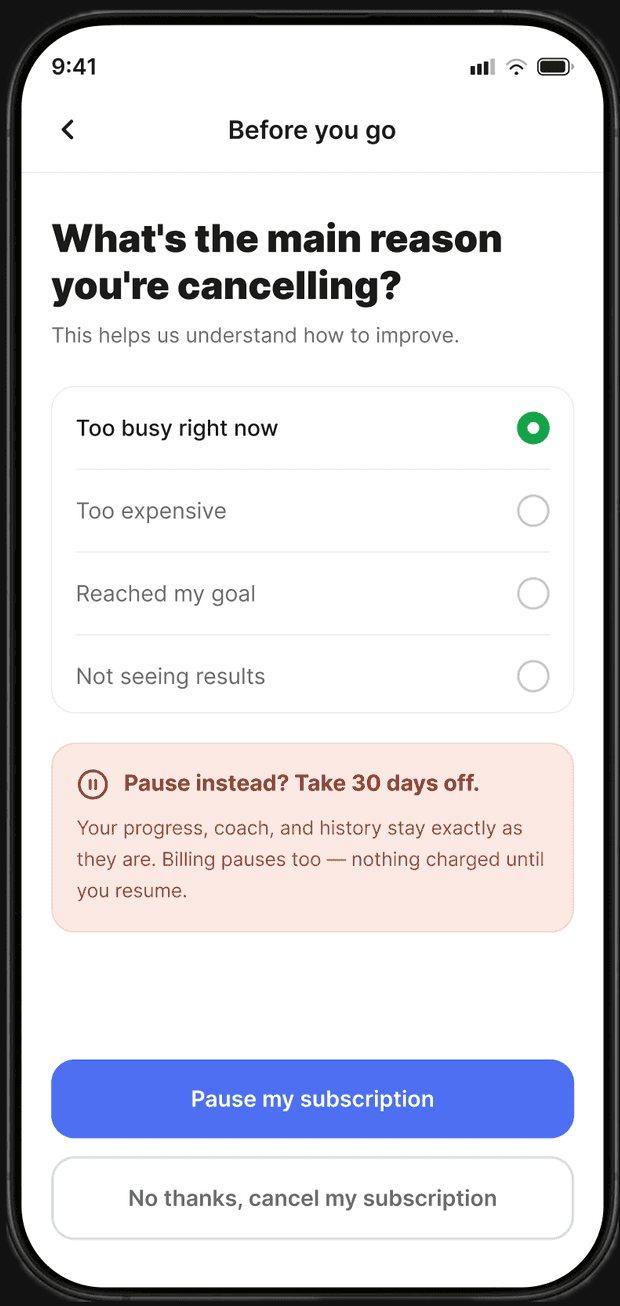
One matched offer — pause or discount, based on the real reason
Fix 03
Equal-weight exit — declining is as easy as accepting
Fix 04
Immediate confirmation — no redirect, no second pitch
CH 05Walkthrough
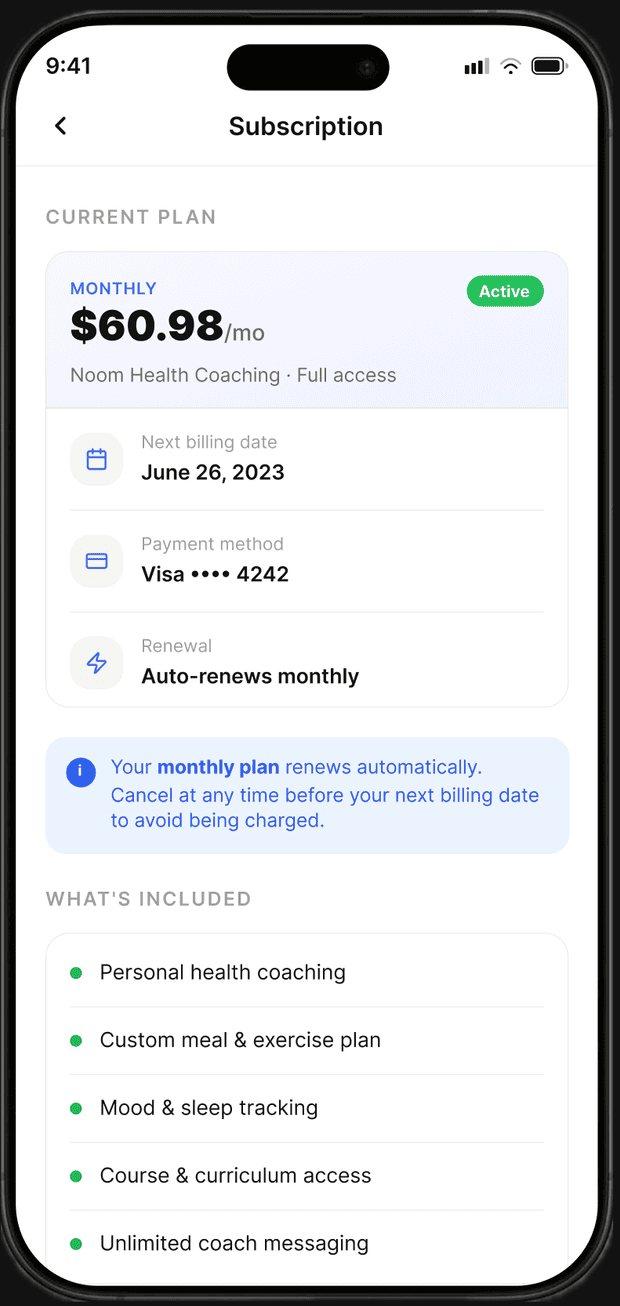
The flow, step by step
CH 06Why it matters
Business impact
Friction cost $56M and years of complaints — not retained revenue. This replaces friction with a real reason to stay.
- ~35%cancel due to being too busy
- ~20%assumed pause-acceptance rate
- ~70subscription-months recovered per 1,000 cancellations
Placeholder figures to show the shape of the reasoning — the real rate is the first thing to test.
CH 07Takeaway
The real work wasn't the screens.
It was one constraint: an offer only respects the user if walking away costs exactly as much effort as accepting it.